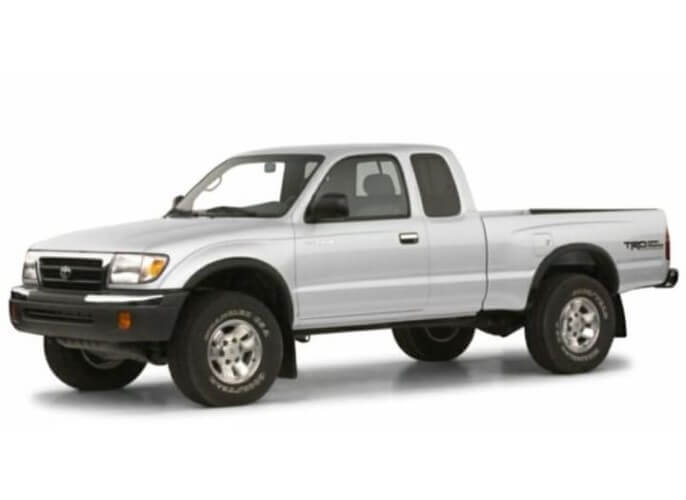
1995 - 2004 Toyota tacoma 2.4L Torque Specs
2000 Toyota tacoma 2.4L Complete Torque Specs List
Click the area you are looking for!
Toyota Tacoma 2.4L DOHC Repair Information
Toyota Tacoma 2.4L DOHC Engine Repair Information
Here you can find information regarding the assembly of the Toyota 2.4L DOHC engine. In this guide we will start from the inside of the engine including the crankshaft, connecting rods, and piston ring installation and then move outwards all the way to the pulley belt system. Along the way correct procedures and torque specs will be given to aid in the assembly of the engine. Feel free to start from the beggining and work your way outwards or skip ahead to your current position in the engine for what you may need.
Crankshaft Main Caps Installation
Toyota Tacoma 2.4L DOHC Main Cap Torque Specs : 29 ft-lbs + 90°
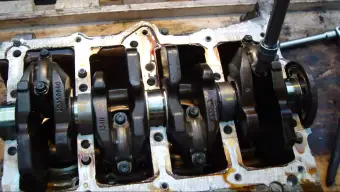
The 2.4L engine block main bearing caps should be inspected for any defects or flaws before installation. Be sure to lubricate the bearing surfaces prior to installation. Once prepared you can place the caps onto the crankshaft and begin tightening the bolts down in a multi stage process. The first being 10 ft-lbs starting from the middle and going outwards. The second time around you can go to 29 ft-lbs and then for the third time you do an additional 90 degree turn for each bolt. Once finished you should be good to continue with the rest of the engine.
Piston and Connecting Rod Installation
Toyota Tacoma 2.4L DOHC Connecting Rod Torque Specs : 33 ft-lbs + 90°
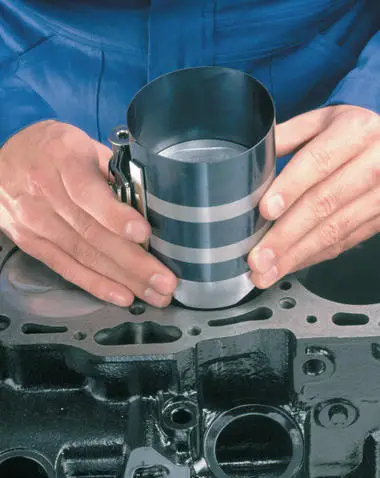
To install the pistons and connecting rods you must first install the piston rings into each piston. Be careful not to stretch the rings or break them during installation. Make sure to put the correct rings in the correct positions, this can be determined by looking at the instructions given with the new rings. Each ring manufacturer is different so be sure to check for your specific rings. Once the rings have been installed you can now fit the connecting rod bearings into the end caps and lube them up with oil or lithium grease. The piston can now be lowered into the cylinder, make sure the dot or mark is facing the front of the engine and that you don't scratch the cylinder. Once installed you can match the connecting rod caps with the correct rods and start to torque the connecting rod bolts to 33 ft-lbs and then an additional 90 degree turn for each bolt. After all are done rotate the crank to ensure all pistons move smoothly in and out of their cylinders and nothing binds.
Oil Pump Installation
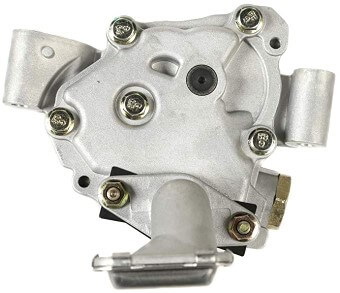
When installing the oil pump be sure to use the proper sealant around the pump base if neccessary to ensure that oil pressure doesn't drop due to leakage. After preparing the contact surfaces carefully install the oil pump mechanics onto the crankshaft by aligning the crankshaft end with the hole on the center of the pump gear. Once installed you can then place the oil pump cover onto the timing cover and tighten down the philips screw to about 8 ft-lbs. You may need to use a series of adapters in order to get your torque wrench to use a philips bit for torqueing. The oil pickup tube on this engine then bolts up to the bottom of the engine block through the use of 2 nuts. These nuts can be tightened down to 10 ft-lbs.
DOHC Oil Pump8 ft-lbs
DOHC Oil Pickup Tube10 ft-lbs
Cylinder Head Installation
Toyota Tacoma 2.4L DOHC Cylinder Head Torque Specs : 29 ft-lbs + 90° + 90°
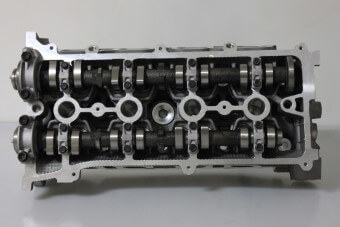
The first thing you must do when installing cylinder heads is to ensure both the block and head surfaces are completely clean from dust, oil, and any debris. The next thing you must to is to set the camshafts to their correct positions to prevent any valves from hitting pistons during installation and torquing of the head bolts. Much the same you have to set the pistons to their correct locations, typically this means putting the #1 piston to TDC or Top Dead Center. Once everything is ready you can install the head gasket onto the engine block by aligning the alignment dowels. Something I usually do is spray down the head gasket with some engine copper spray from permatex which you can find
here, this ensures that any gaps that could be present between the 2 surfaces gets filled with the spray. It also helps to transfer heat between the 2 metals. With the gasket in place you can set the cylinder head onto the gasket and block, if needed have someone assist with this process as the head can be heavy and you don't want to scratch anything or drop it! Once the head has been placed you will want to start installing the head bolts to make sure it doesn't move. Be sure to buy new head bolts as many manufacturers use TTY or Torque to Yield head bolts meaning they stretch during torqueing and cannot be used twice. Also make sure to lubricate the bolts in clean engine oil before installing them into the head. Once all the head bolts have been installed and finger tightened you can start the torqueing process, almost all head bolts have a multi-step process for torqueing. The 2.4L DOHC starts off with 29 ft-lbs and then requires you to back them off a full turn. Then you must again torque them to 29 ft-lbs and then a 90 degree turn and finally add another 90 degrees by going through each bolt with each step. After torquing the heads are completely installed and you can now move to intalling the timing.
Timing Chain and Tensioner Installation
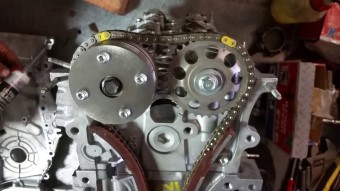
On the Toyota 2.4 DOHC engine the timing system is ran by the use of a chain. This chain system consists of a sprocket on one of the camshafts, a tensioner with guides, and a sprocket on the crankshaft. Before installing the chain itself make sure all of the components are tight and torqued properly. The camshaft sprocket get tightened to 54 ft-lbs, while the tensioner and guides get tightened down to 15 ft-lbs. The camshafts are held down to the cylinder head by camshaft bearing caps which should be tightened to 12 ft-lbs. The crankshaft timing sprocket merely gets placed onto the shaft and aligned using the woodruf key. With the sprockets all in place and the number 1 cylinder in TDC or top dead center you can then install the chain being sure to align the timing marks as shown in the picture. With the chain in place properly you can then remove the tensioners holder which will tighten up the chain and hold it from moving any further. Finally the crankshaft position sensor can be placed into its location and tightened down to 10 ft-lbs.
Camshaft Sprocket54 ft-lbs
Crankshaft Position Sensor10 ft-lbs
Camshaft Bearing Caps12 ft-lbs
Timing Tensioner and Guides15 ft-lbs
Timing Cover Installation
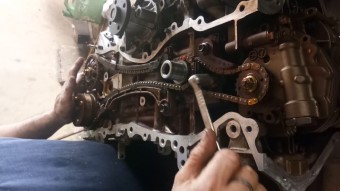
The timing cover on the 2.4L is used to cover up the internals of the engine and hold in massive amounts of oil. For this reason I recommend using some silicon sealant along with a new gasket during installation. Be sure to clean all of the metal surfaces prior to installation and placing the silicon onto the metal. With everything ready to install be sure to double check your timing and engine internals before placing the cover in place. If everything is good to go then place the cover onto the engine block and begin to tighten down the bolts hand tight. Once all of the bolts have been set in place be sure to follow your sealants instructions by waiting the recommended time. The timing cover gets tightened down using 3 different types of fasteners, the first being a smaller 12mm bolt head. These should be tightened down to 16 ft-lbs. The second is a larger 14mm bolt head which should be tightened down to 32 ft-lbs. The last of the fasteners are nuts which get tightened down to 14 ft-lbs. Be sure that all fasteners have been tightened properly before moving on to the next step.
Toyota Tacoma Timing Cover Torque Specs (12 mm): 16 ft-lbs
Toyota Tacoma Timing Cover Torque Specs (14 mm): 32 ft-lbs
Timing Cover Nut14 ft-lbs
Oil Pan Installation
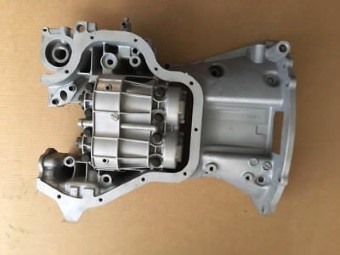
Much like the timing cover on the 2.4L the oil pan plays an important role in keeping the engine oil inside the engine. For this reason I recommend using a new gasket as well as some silicone sealant during installation. Using the same technique as before with the cover you clean the surfaces of both the oil pan and the engine block and then install the new gasket onto the block and then follow it up with some silicone sealant. Be sure to follow your sealants instructions to ensure you get the best seal from your application. The oil pan bolts torque to 9 ft-lbs in a cross pattern design. Along with the pan is the oil pan drain plug, this gets removed and reinstalled quite frequently and can be torqued down to 27 ft-lbs.
Oil Pan9 ft-lbs
Oil Drain Plug27 ft-lbs
Valve Covers Installation
Toyota Tacoma Valve Cover Torque Specs : 9 ft-lbs
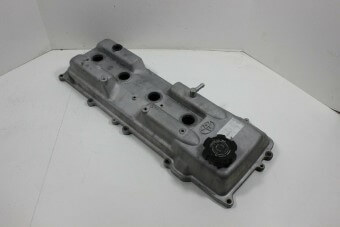
The valve cover installation is rather simple, there are rubber seals for each bolt hole and a silicone gasket that prevents oil from leaking out of the engine. It is recommended to replace both the seals and the gaskets although if they are in good condition you can reuse them. If you do choose to reuse them I would use some silicone sealant along with the silicon gasket to ensure it does not leak. The valve cover bolts torque down to 106 in-lbs or about 9 ft-lbs in a criss cross order. Be sure not to miss any bolts to avoid having oil leak out onto the exhaust pipes and cause a lot of smoking.
Intake Manifold and Fuel Rail Installation
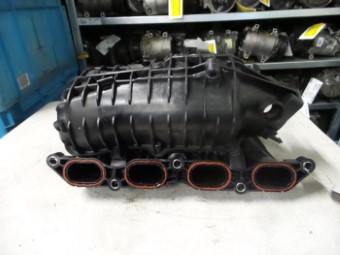
When installing the intake manifold you want to make sure you have all the surfaces as well as intake holes cleaned out before placing the manifold into position. Once cleaned you can then place the intake manifold gaskets onto the alignment pins. If you want you can also use a little bit of sealant on the gaskets to help ensure there are no leaks. With the gaskets in place you can now put the manifold down onto the gaskets and begin to install the bolts. The intake manifold bolts torque to 15 ft-lbs and can be tightened starting from the inside and going outwards. The COPs or the coils for the spark plugs get torqued down to 60 in-lbs or about 5 ft-lbs and the spark plugs themselves can be torqued down to 14 ft-lbs, be careful not to overtorque these as they can snap and cause big problems. When installing the fuel rail make sure that all the fuel injectors are in good condition and that all the o-rings are in place and are in good condition. If everything is good you can place the fuel rail into position and push the injectors into their holes and start to torque the rail bolts to 90 in-lbs or about 8 ft-lbs. The fuel inlet pipe can be tightened down to 22 ft-lbs.
Intake Manifold15 ft-lbs
Ignition Coil5 ft-lbs
Spark Plug14 ft-lbs
Fuel Rail8 ft-lbs
Fuel Inlet Pipe22 ft-lbs
Exhaust Manifold Installation
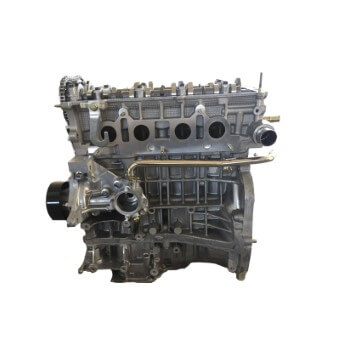
The exhaust manifold can be installed by cleaning the surface areas on both the head an the manifold itself and then by using the exhaust manifold gasket and putting it in place. Once the gasket is in its location you can put the manifold onto the heads and begin to torque it down to 36 ft-lbs. I always use some copper spray from permatex on the exhaust manifold gaskets to ensure I do not end up with any exhaust leaks once done. When you go to install the engine into the vehicle or if it is already in the vehicle the torque specs for the exhaust manifold to the exhaust pipes or catalytic converter is 35 ft-lbs. The EGR system consists of a series of pipes that range from the manifold to the head. All of the EGR pipes can be tightened down to 14 ft-lbs.
Exhaust Manifold36 ft-lbs
Exhaust Pipe35 ft-lbs
EGR Pipe14 ft-lbs
Water Pump and Thermostat Installation
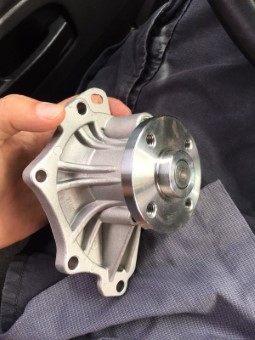
The water pump on the Toyota 2.4L engine should be installed by using a new gasket and if desired some silicone sealant to help prevent leaks. Be sure to clean both metal surfaces prior to installing the pump. Once prepared the pump can be moved into placed and the bolts should be torqued to 18 ft-lbs. The pump does contain a single bolt which is smaller than the rest. This smaller bolt should be tightened down to 8 ft-lbs. The water pump pulley can be torqued to the water pump itself with 16 ft-lbs.
Water Pump18 ft-lbs
Water Pump Pulley16 ft-lbs
Front Dress and Pulley belt Installation
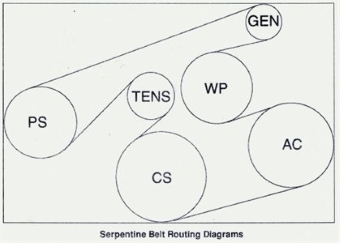
Most of what is left on the engine is just place and tighten objects such as the belt pulleys, belt tensioner, throttle body, oil filter neck, crankshaft pulley, and motor mounts. If the items have a gasket and hold either oil or coolant inside the engine then feel free to add some sealant along with the gasket. Always be sure to inspect your gaskets and replace them if there is any deteriation or flaws with them. For the belt system the crankshaft pulley gets torqued to 193 ft-lbs. The belt tensioner can be tightened to 18 ft-lbs and the idler pulley can be torqued down to 30 ft-lbs. When installing be sure they both turn smoothly and if they do not then replace them with new ones as the bearings can go bad. The engine motor mount can be installed onto the engine block if it hasn't been already, the torques for the mount to the block is 59 ft-lbs and then when installing the mount to the vehicle or frame it can be torqued to 35 ft-lbs. Finally the throttle body can be installed on top of the intake manifold with a good gasket and some added sealant using 7 ft-lbs in a criss cross pattern. For installing the belt you can use a tool to move the tensioner into its springed state and install the belt as shown in the picture. The power steering pump pulley should be tightened down to 14 ft-lbs.
Crankshaft Pulley193 ft-lbs
Idler Pulley Bolt30 ft-lbs
Belt Tensioner18 ft-lbs
Motor Mount to Engine59 ft-lbs
Motor Mount to Frame35 ft-lbs
Power Steering Pulley14 ft-lbs
| Timing Torque Specs | |
|---|---|
| Timing Cover Torque spec (12 mm) | 16 ft-lbs |
| Timing Cover Torque spec (14 mm) | 32 ft-lbs |
| Timing Cover Nut Torque spec | 32 ft-lbs |
| Timing Chain Tensioner and Guides Torque spec | 15 ft-lbs |
| Camshaft Sprocket Bolt Torque spec | 54 ft-lbs |
| Crankshaft Postition Sensor Torque spec | 10 ft-lbs |
| Camshaft Bearing Caps Torque spec | 12 ft-lbs |
| Cylinder Head Torque Specs | |
| Cylinder Head Torque Specs | 29 ft-lbs + 90° + 90° |
| Valve Cover Torque specs | 9 ft-lbs |
| Exhaust Manifold Torque specs | 36 ft-lbs |
| Exhaust Manifold to Pipe Torque | 35 ft-lbs |
| Exhaust EGR Pipe Torque Spec | 14 ft-lbs |
| Bottom End Torque's | |
| Main Cap Bolts Torque Spec | 29 ft-lbs + 90° |
| Connecting Rod Bolts Torque Spec | 33 ft-lbs + 90° |
| Oil Pump Torque Specs | 8 ft-lbs |
| Oil Pump Pickup Tube Torque Specs | 10 ft-lbs |
| Oil Pan Torque Specs | 9 ft-lbs |
| Oil Pan Drain Plug Torques | 27 ft-lbs |
| Intake Manifold and Fuel Rail Torque Spec | |
| Intake Manifold | 15 ft-lbs |
| Fuel Rail Torque Specs | 8 ft-lbs |
| Fuel Inlet Pipe Torque Specs | 14 ft-lbs |
| COP's (Ignition Coil Packs) | 5 ft-lbs |
| Spark Plugs Torque Specs | 14 ft-lbs |
| Throttle Body Torque Specs | 7 ft-lbs |
| Water Pump & Pulley Torque Specs | |
| Water Pump Torque Specs | 18 ft-lbs |
| Water Pump Pulley Torque Specs | 16 ft-lbs |
| Crankshaft Pulley Torque Spec | 193 ft-lbs |
| Belt Tensioner Torque Spec | 18 ft-lbs |
| Belt Idler Pulley Torque Spec | 30 ft-lbs |
| Motor Mount (Engine Side) Torque | 59 ft-lbs |
| Motor Mount (Frame Side) Torque | 35 ft-lbs |